Battery Demand Has Strapped On a Rocket — What Australia's Storage Boom Means for Your Home
Australians installed more batteries in six months than in the prior five years combined. Industry experts are flagging the next wave of trends — and Cosmic is ready to help you ride it.
Key Takeaway
More than 183,000 home batteries were installed across Australia in just the second half of 2025 — a fourfold increase on the same period in 2024. With subsidies fuelling demand, rooftop solar reaching saturation, and industry experts pointing to DC-coupled solar-battery integration as the next standard, the window to act — and save the most — is right now.
A Boom That's Hard to Overstate
The figures from the Clean Energy Council tell a remarkable story. In the six months to 31 December 2025, Australians installed more than 183,000 home batteries — equivalent to the combined total of every battery sold between 2020 and 2024. That's not gradual growth; that's a market transforming at pace.
The Clean Energy Council's chief executive Jackie Trad put it plainly: federal battery programs have “strapped a rocket” to existing momentum. Australia now has more than 450,000 batteries installed on homes and businesses, and that number is climbing every single day.
Meanwhile, rooftop solar installations dropped 20 per cent in 2025 — not because interest has faded, but because the market is maturing. With 4.3 million homes already solar-equipped and average system sizes now hitting 10.6 kW, the focus has shifted. Households that have solar are asking the logical next question: how do I store it?
What's Driving the Surge?
The federal government's Cheaper Home Batteries Program has been the single biggest accelerant — slashing the up-front cost of a typical 10 kWh battery by around 30 per cent, or roughly $4,000. Demand was so fierce that the original $2.3 billion budget — intended to last until 2030 — was on track to be exhausted by mid-2026. In response, Energy Minister Chris Bowen committed an additional $5 billion to keep the scheme running, while tightening eligibility rules to prevent over-sized system rorts.
But subsidies alone don't explain everything. Feed-in tariffs have collapsed across most states, making it far more valuable to store solar energy than export it. Electricity prices have risen more than 50 per cent since 2021 in many parts of the country. And battery technology prices have fallen far enough that payback periods — especially with rebates — are now often under five years.
The Industry's Next Big Trends: What Experts Are Watching
The 2026 Energy Storage Summit in Sydney brought together Australia's leading storage professionals. Several themes emerged that will shape what homeowners and installers should be thinking about right now.
1. DC-Coupled Solar and Battery: The New Standard
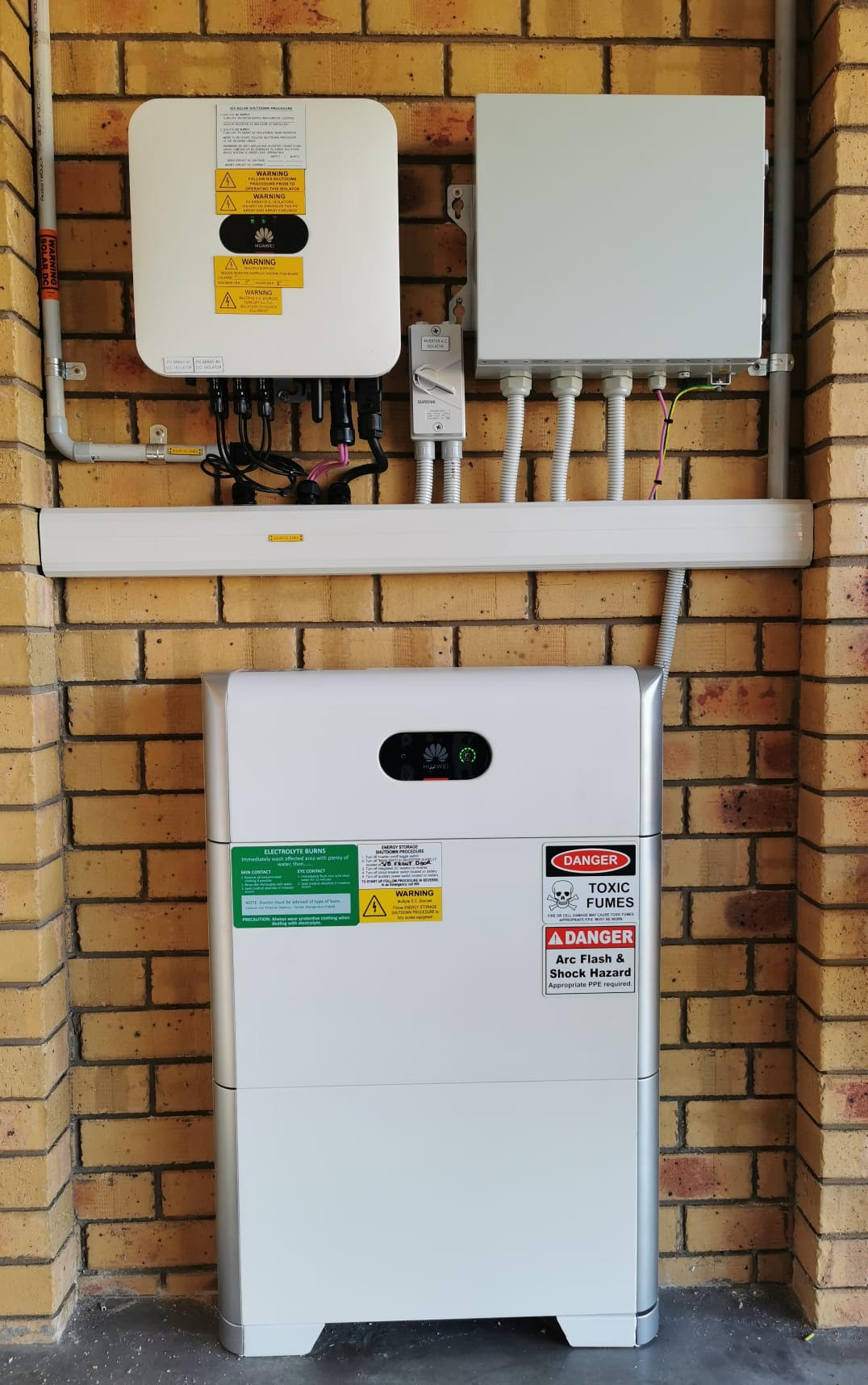
Co-locating battery storage with solar is transitioning from optional to essential. Industry experts at the Summit highlighted that DC-coupled systems — where your solar panels charge the battery directly, before converting to AC — deliver meaningfully better efficiency than older AC-coupled setups. As Wärtsilä's Neha Sinha put it: “The efficiency losses are reduced if you can directly couple the solar to the battery storage.” For homeowners, this means a well-designed solar-plus-battery system installed together can deliver more usable energy from the same panels.
2. Heat Events Are Exposing Undersized Systems
Australia's brutal January 2026 heatwave — with temperatures exceeding 46°C in parts of the country — exposed a real limitation of grid-scale batteries: most provide only 2–3 hours of storage, which proves insufficient during prolonged peak demand periods. The lesson for households is clear. A battery sized just to handle a typical evening peak may leave you short during a multi-day heat event. Experts at the Summit emphasised that right-sizing your system matters — and that the trend toward larger-capacity home batteries is not just about bill savings, but genuine energy security.
3. VPPs Are Proving Their Worth
Virtual Power Plants (VPPs) — networks that pool household batteries together to trade energy on the grid — are maturing rapidly. ACCC research shows households enrolled in a VPP pay the lowest power bills of any household type in Australia, saving around $106 per quarter on average. At the Summit, operators confirmed that VPP participation is becoming a standard expectation, not a niche add-on. Smart software is now essential to maximising returns from battery assets — whether at household or grid scale.
4. Rooftop Solar Has Peaked — But Batteries Are Just Beginning
The Clean Energy Council noted that 2025 was the first year since 2020 that annual rooftop solar installations fell below 300,000, suggesting the market may have hit a saturation point. But this isn't a story of decline. Australia's rooftop solar capacity now stands at an extraordinary 28.3 GW — exceeding the entire coal fleet's 22.5 GW. The new frontier is storage. With so much solar on so many roofs, capturing and using that energy — rather than exporting it for near-zero feed-in tariffs — is where the next wave of value lies.
A Question of Who Benefits
Some economists have questioned whether the battery subsidy scheme amounts to middle-class welfare — noting that renters, apartment dwellers, and lower-income households often can't access it. Macquarie University's Associate Professor Rohan Best acknowledged the scheme's merits but noted that “it's very likely to have been unfair” in channelling subsidies toward households that already have more financial resources.
The broader argument in favour of the scheme rests on grid-wide benefits. When thousands of batteries are coordinated through VPPs, they reduce peak demand on the grid — lowering wholesale electricity prices for everyone, including those without solar. Jackie Trad put it simply: “Energy customers who sign up to a virtual power plant are currently paying the lowest power bills in Australia.” The grid benefits, and so does the wider community.
VPP at a Glance
How Cosmic Renewable Energy Can Help
At Cosmic Renewable Energy, we've been tracking these trends closely — and building our offering around them. Whether you already have solar and want to add storage, or you're ready for a complete solar-plus-battery system from scratch, here's what we bring to the table:
DC-Coupled System Design
We design solar-plus-battery systems that maximise efficiency from day one. Where DC coupling is the right fit for your home, we specify it — so you capture more of every kilowatt-hour your panels produce.
Right-Sized Storage
We don't do one-size-fits-all. Given the heat events exposing undersized systems, we size your battery to your actual usage, your household's peak demand, and the backup security you need.
VPP-Ready from Day One
Every battery we install is VPP-compatible. We'll help you get enrolled so your system can earn money by contributing to the grid during peak periods — on top of your own bill savings.
Full Rebate Management
We handle the entire rebate process — federal STCs, the Cheaper Home Batteries Program, and state-specific incentives — so you capture every dollar you're entitled to without the paperwork headache.
CEC-Approved Products Only
We only install batteries from the Clean Energy Council approved product list — including FoxESS, GoodWe, Tesla Powerwall, and BYD — ensuring quality, warranty protection, and rebate eligibility.
Nationwide Coverage
From Sydney to Perth, Melbourne to Brisbane — Cosmic installs solar-plus-battery systems across Australia. Wherever you are, we'll design a system around your home and energy needs.
Rebates Are Already Shrinking
The federal STC multiplier dropped on 1 May 2026, reducing the rebate value on a 13.5 kWh battery by hundreds of dollars — with further drops scheduled every six months through to 2030. The households that acted in H2 2025 locked in the best available rates. There is still a strong incentive to act now, before the next scheduled reduction.
The Bottom Line
Australia's energy transition has reached an inflection point. Rooftop solar has done its job, building a 28.3 GW distributed generation fleet that now dwarfs the coal industry. The next chapter is storage — and Australians are embracing it at a pace nobody predicted.
The trends emerging from the 2026 Energy Storage Summit point in one direction: larger, smarter, more integrated systems — designed to handle heat events, earn income through VPPs, and deliver genuine energy independence. At Cosmic Renewable Energy, that's exactly what we install.
Sources:
- ABC News — “Subsidies the fuel as battery demand straps on a rocket” (4 Feb 2026). Read article
- Energy Storage News — “Trends to look out for at Energy Storage Summit Australia 2026”. Read article
Ready to Add Smart Storage to Your Solar?
Get a free quote from Cosmic and find out how a right-sized, VPP-ready battery system can cut your bills, protect against outages, and earn you money from the grid.